Find Out What Your Cyber Insurance Actually Covers Before You Need It
Most businesses do not discover their cyber coverage gaps until they file a claim. By then, it is too late to fix the policy, the controls, or the outcome. The Winter-Dent Cyber Security Scorecard gives you continuous visibility into your security posture, the same A through F rating system that insurance carriers, vendors, and regulators increasingly use to evaluate cyber risk.
Already have a scorecard? Schedule a coverage review.

The Coverage Gap Most Businesses Do Not See Coming
Cyber insurance has changed faster than most policies. Premiums have climbed, sublimits have tightened, and exclusions have multiplied. Three things are happening at once across the market:
- Carriers are denying claims for businesses that cannot prove basic controls were in place at the time of the incident.
- Standard policies often cap social engineering and funds transfer fraud at a fraction of the overall limit, sometimes as low as $50,000 or $100,000.
- Renewal applications now require detailed attestations about MFA, backups, endpoint detection, and email security. Inaccurate answers can void coverage.
The result is a widening gap between what business leaders think they are covered for and what their policy will actually pay.
A $180,000 Wire That Never Arrived
A regional construction firm received what appeared to be a routine email from a long-time subcontractor. The message confirmed a payment schedule and included updated banking instructions for an upcoming progress payment. The accounting team verified the email address, matched the invoice to an open project, and processed the wire for $180,000.
The email was not from the subcontractor. A threat actor had been monitoring the subcontractor’s inbox for several weeks, learned the project timeline, and intercepted the payment request with a spoofed reply chain. The wire cleared to an account that was emptied within hours.
- When the firm filed a claim under its cyber policy, three problems surfaced:
- The funds transfer fraud sublimit was $100,000, not the $2 million policy limit the owner assumed applied.
- The policy required documented callback verification of any banking change. The firm’s process was informal and could not be substantiated.
- The carrier’s forensic review identified inconsistent multi-factor authentication across the company’s email environment, which conflicted with the attestation on the renewal application.
Final recovery from the carrier was less than 30 cents on the dollar. The remaining loss came out of operating cash flow.
This scenario is preventable. Not with more insurance alone, but with a clearer view of what carriers see, what your policy requires, and what your operation can change.
What the Cyber Security Scorecard Shows You
The Winter-Dent Cyber Security Scorecard is powered by SecurityScorecard, the same platform insurance carriers, regulators, and enterprise procurement teams use to evaluate third-party cyber risk. There is no software to install and no access to your systems is required. The assessment is built from external signals already visible on the public internet, which is exactly what carriers and threat actors are evaluating.
You receive:
Overall Cyber Rating
Factor Scores
Vulnerabilities Report
Peer Comparison
There is no software to install. No access to your systems is required. The assessment is built from external signals already visible on the public internet, which is exactly what carriers and threat actors are evaluating.
A Cyber Incident Is No Longer Just an IT Problem
The financial loss is only the first layer. When a cyber event happens, the questions land on leadership, not the help desk.
Owners, CFOs, and executives are increasingly expected to demonstrate they understood the exposure, verified the controls, and matched coverage to the actual risk. Boards, lenders, partners, and regulators are setting a higher standard. “We trusted our IT provider” is becoming harder to defend as a leadership posture.
This is what is changing:
- Personal attestation. Leadership signs the cyber application. Inaccurate answers, even unintentional ones based on what an IT provider said, can void coverage and create personal exposure.
- Operational fallout. Wire fraud and ransomware events hit operating cash flow directly, not an IT budget line.
- Reputational exposure. Customer notification, regulatory filings, and press response fall to the executive team.
- Fiduciary scrutiny. Inadequate diligence around cyber risk is increasingly cited in claims of breach of duty, particularly when customer data or financial fraud is involved.
- Insurance defensibility. A documented assessment, verified controls, and properly matched coverage are the strongest evidence that leadership did its job.
The Scorecard is the simplest way to start building that documentation. It takes five minutes to request and gives leadership a clear, defensible record of what was assessed, when, and what was found.


How It Works
Request Your Scorecard
Submit the form below. You will need your business name, website, and basic contact information.
Receive Your Assessment
An advisor reviews the SecurityScorecard findings before delivery and flags the issues that matter most for your industry and coverage profile.
Walk Through Results
Optional 15-minute review with an advisor to interpret the A through F factor scores, identify remediation priorities, and discuss how your current coverage responds to the exposures uncovered.
Decide what to do next
No obligation. Many clients use the Scorecard as a starting point for a broader cyber risk and coverage review under our Prevent365 methodology.
Cyber Is an Operational Risk, Not Just a Policy Question
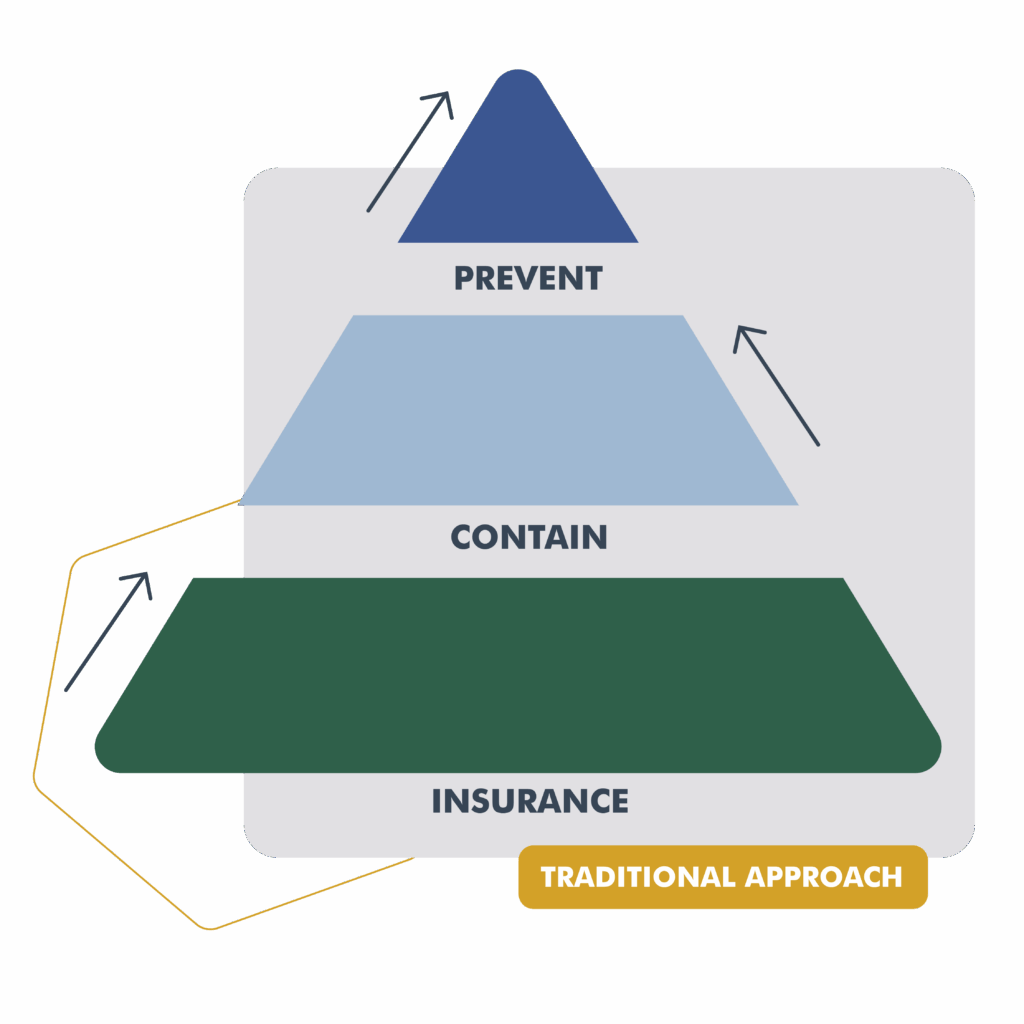
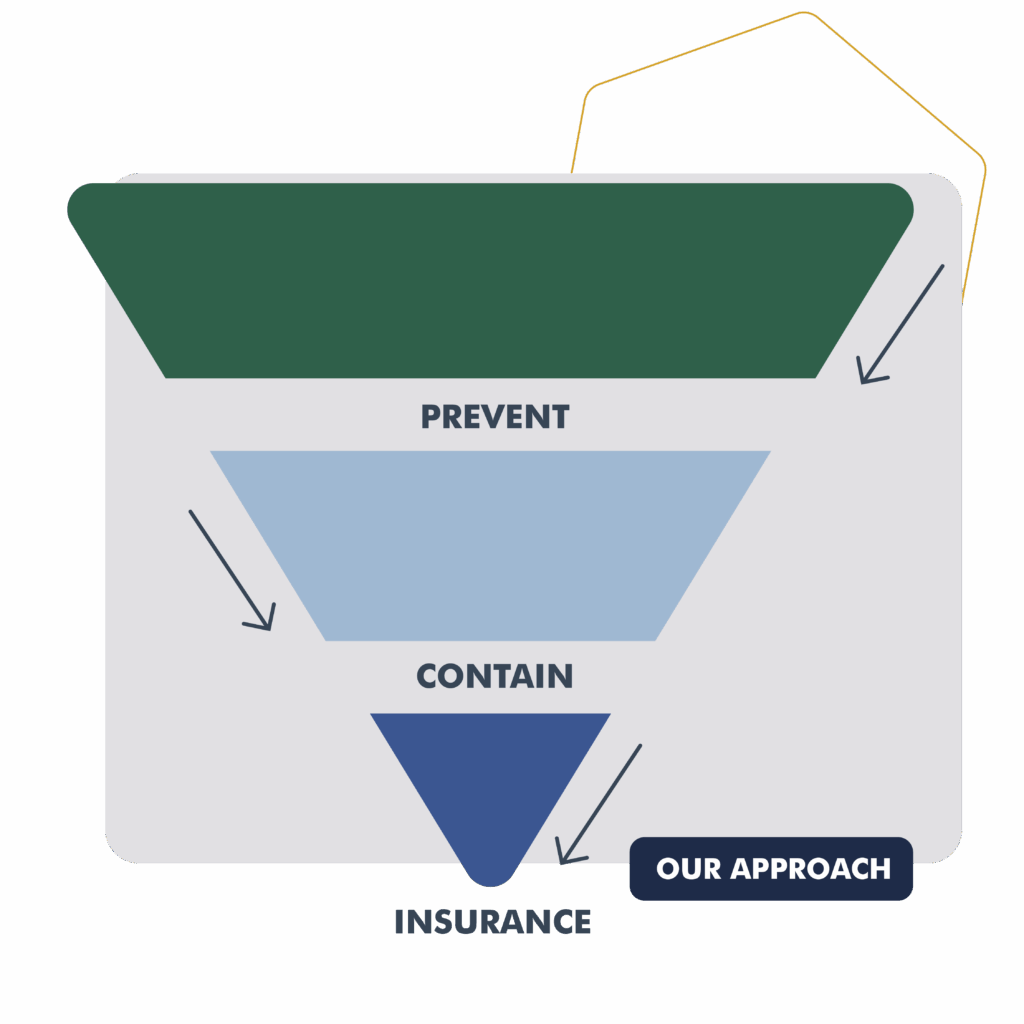
How Prevent365 Applied to Cyber Risk
Two Ways to Get Ahead of Your Cyber Risk
Cyber Security Scorecard
Complimentary. 48-hour turnaround.
A no-cost external rating powered by SecurityScorecard that grades your business the same way carriers and threat actors evaluate it. Continuous monitoring included. No software install. No system access required. Findings delivered within 48 hours.
Best for: Businesses that want a clear, fast picture of their external cyber exposure with no obligation.
Request My Free ScorecardFull Third-Party Security Evaluation
Comprehensive. Underwriter-ready.
A deeper evaluation through a vetted compliance partner that builds the internal foundation carriers expect to see: written policies, employee training, task monitoring, insurance alignment, and IT vetting. All documented and auditable.
Best for:Businesses approaching a major renewal, responding to a prior loss, or working in industries where carriers are demanding more evidence.
Schedule a ConversationGet Your Free Cyber Security Scorecard
Email Us
info@winter-dent.com
Call Us
(573) 634-2122