Insurance can pay for a workplace injury. But it can't restore an employee's health, repair your company's reputation, or recover the productivity lost while you train a replacement. It can't prevent the next incident or build the organizational resilience you need to thrive long-term.
Building for impact means going beyond managing insurance costs to create protection across five critical dimensions of your organization. These dimensions compound over time, creating lasting value that extends far beyond any single policy year.
At Winter-Dent, the Build for Impact phase of Prevent365 focuses on protecting what matters most: your people, your financial stability, your resilience, your compliance position, and your reputation.

Why Long-Term Impact Matters
Most businesses measure risk management success by this year's insurance premium. Did it go up or down? That single metric misses the bigger picture.
For every dollar of direct costs covered by insurance, there are typically $4-6 in hidden indirect costs that no policy addresses.* When workplace incidents occur, insurance might cover 20-25% of the total impact (medical expenses, property damage, workers' compensation claims, legal fees).* But the remaining 75-80% falls outside any policy: lost productivity, training disruptions, morale damage, reputation impact, and competitive disadvantages.*
Building for long-term impact means addressing the full spectrum of costs and risks, not just the insurable portion.
When you prevent incidents rather than just insuring against them, when you build resilience rather than just buying coverage, when you create lasting protection rather than just renewing policies, you're building for impact.
The Five Dimensions of Long-Term Impact
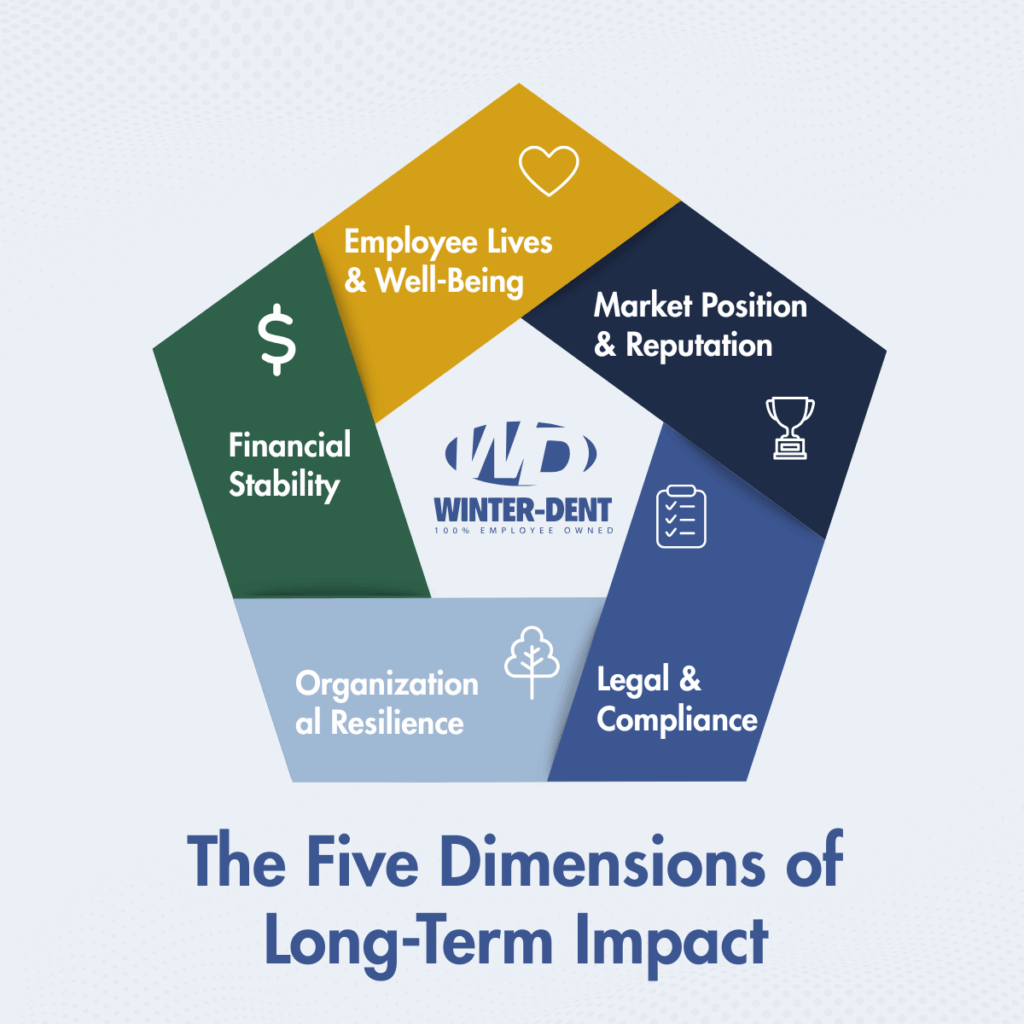
True protection isn't one-dimensional. It extends across every aspect of your organization. Here's how building for impact creates value in five critical areas.
Dimension 1: Employee Lives and Well-Being
Insurance covers medical costs after workplace accidents, but it can't bring an employee back to life or repair the emotional impact on teams and families.
This is the most important dimension. At Winter-Dent, our core mission is "to create healthier, safer, and more productive workplaces, ensuring that employees return home safely to their families and that businesses thrive within a strong, healthy community."
What Building for Impact Means for Your People
- Workplace Safety Culture Development: When safety becomes part of your organization's DNA, prevention becomes everyone's responsibility. Employees don't follow safety rules because they have to, but because it's how your organization operates.
- Hazard Identification and Elimination: Proactive programs prevent incidents before they occur. Rather than reacting after someone gets hurt, you identify and eliminate hazards before they cause harm.
- Mental Health and Wellness Programs: Employee well-being extends beyond physical safety. Comprehensive wellness initiatives support overall health, reduce stress, and create environments where people can thrive.
- Employee Engagement and Morale Protection: When employees feel valued and protected, it shows in their work. Engagement increases, turnover decreases, and your workplace culture becomes a competitive advantage.
The Impact That Compounds
Protecting employee lives creates ripple effects throughout your organization:
- Reduced incident rates mean fewer people get hurt
- Lower turnover preserves institutional knowledge and reduces recruitment costs
- Improved morale boosts productivity and innovation
- Enhanced reputation makes it easier to attract top talent
Most importantly, employees go home safe to their families every day. That's impact that extends far beyond any insurance policy.
Dimension 2: Financial Stability and Sustainability
Predictable insurance costs through proactive risk management create financial stability and free capital for growth.
When you reduce your total cost of risk (not just insurance premiums), you fundamentally change your organization's financial position.
Beyond Premium Dollars
Traditional risk management focuses on this year's insurance premium. Did it increase 5%? 10%? That narrow focus misses the larger financial impact.
Remember the cost breakdown: Direct insurable costs account for only 20-25% of the total incident impact.* The remaining 75-80% consists of:*
- Lost productivity (25-40%)
- Investigation and administrative time (10-15%)
- Training replacement employees (8-12%)
- Schedule disruptions (5-10%)
- Morale and reputation impact (10-20%)
- Regulatory compliance efforts (2-8%)
When you prevent incidents rather than just insuring against them, you address this entire cost structure.
Note: Percentages represent typical ranges across industries based on incident cost analysis. Actual costs vary significantly by incident type, industry, company size, and geographic location.
What Financial Stability Creates
- Better Cash Flow: Fewer unexpected incidents mean fewer disruptions to operations and more predictable financial performance. Capital that would have gone to claim costs, productivity losses, and recovery efforts remains available for strategic investment.
- Sustainable Competitive Advantage: Lower operating costs from effective risk management create pricing flexibility and margin protection. You can invest in growth, technology, and talent while competitors struggle with rising insurance and incident costs.
- Access to Capital: Lenders and investors view well-managed companies more favorably. Strong risk management demonstrates operational maturity and reduces perceived investment risk.
- Long-Term Cost Stability: Proactive prevention creates stable, predictable insurance costs that withstand market volatility. While competitors face double-digit increases in hard markets, your performance earns you stability.
The Path to Advanced Risk Financing
For businesses with mature risk management programs, financial stability opens the door to sophisticated alternatives such as workers' comp captives and group captives.
These programs provide:
- Greater control over insurance costs and coverage
- Potential for profit sharing and dividends
- Long-term cost stability
- Alignment with other high-performing companies
Prerequisites for captive consideration include strong safety culture, consistent risk management performance, leadership commitment to continuous improvement, financial stability, willingness to invest in prevention, and track record of claims management excellence.
The work you do through Prevent365 builds the foundation for captive eligibility, documenting the risk management capabilities that captive managers look for.
Dimension 3: Organizational Resilience
Resilience means your organization can adapt to emerging risks, recover from disruptions, and maintain operations even when challenges arise.
Insurance provides financial recovery after incidents. Resilience prevents many incidents from becoming major disruptions in the first place and ensures you can handle those that do occur.
What Resilient Organizations Have
- Business Continuity and Crisis Management: Strong plans and procedures ensure critical operations continue even during emergencies. You've thought through scenarios, identified vulnerabilities, and prepared responses before crises hit.
- Knowledge Retention and Succession Planning: When critical team members leave unexpectedly, the knowledge gap and recruitment costs can devastate operations. Resilient organizations document institutional knowledge, cross-train employees, and maintain succession plans that prevent single points of failure.
- Operational Flexibility and Recovery Capacity: Resilient businesses can adapt to changing conditions. Whether it's supply chain disruptions, regulatory changes, market shifts, or unexpected incidents, you have the systems and flexibility to adjust and recover.
- Reputation Resilience: Your reputation can withstand challenges because it's built on consistent performance and transparent communication. When issues do occur, your track record and response earn the benefit of the doubt from customers, employees, and partners.
Building Resilience Through Prevent365
The four phases of Prevent365 systematically build organizational resilience:
- Diagnose the Root Cause: Understanding your risk landscape reveals vulnerabilities before they become crises. The Prevent First Assessment identifies not just current issues but emerging threats.
- Differentiate Your Business: Strong market positioning provides stability. When carriers recognize your risk management excellence, you maintain access to coverage even in hard markets.
- Go Beyond the Policy: Proactive controls reduce dependency on insurance for protection. You've addressed risks at their source rather than just transferring them.
- Build for Impact: This phase brings everything together, creating resilience that compounds year over year.
Dimension 4: Legal and Compliance Position
Staying ahead of regulatory changes and maintaining strong compliance positions protects your organization from penalties and litigation risk that no insurance policy covers.
What Insurance Won't Protect
ERISA, ACA, COBRA, and HIPAA violations can result in significant fines and legal action that insurance won't cover. When regulatory agencies levy penalties for non-compliance, you pay those costs directly.
Deliberate violations and intentional misconduct are explicitly excluded from most insurance policies. If your business knowingly violates regulations or engages in prohibited practices, insurance provides no coverage.
Building Strong Compliance
- Comprehensive OSHA Compliance and Safety Programs: Proactive compliance prevents citations, penalties, and the operational disruptions that follow enforcement actions. Tools like OSHAlogs streamline recordkeeping and help identify trends before they trigger regulatory attention.
- Strong HR Policies and Employee Handbooks: Well-crafted handbooks and policies set clear expectations, comply with employment laws, and protect the company from liability while being fair to employees. Your handbook can be either a legal shield or a liability, depending on how it's written and maintained.
- Documented Due Diligence and Good Faith Efforts: When issues arise, documented evidence of your compliance efforts and good-faith attempts to address problems demonstrates organizational commitment and can significantly influence regulatory and legal outcomes.
- Regulatory Agency Credibility: Organizations with a track record of proactive compliance and cooperation build credibility with regulatory agencies. This relationship can make the difference between warnings and citations, minor penalties and major enforcement actions.
The ComplianceCheck Advantage
ComplianceCheck ensures your business adheres to regulatory requirements across safety, health, and HR, reducing the risk of penalties and improving overall compliance. The tool helps you track requirements across multiple jurisdictions and stay current with changing regulations.
This systematic approach to compliance management means you're not scrambling to respond to violations but staying ahead of requirements proactively.
Dimension 5: Market Position and Reputation
Your reputation as a well-managed, safety-focused organization becomes a competitive advantage that opens doors and creates opportunities.
Public perception and brand value losses from incidents can have long-lasting financial impacts that no insurance policy covers. Competitive disadvantages from operational disruptions can permanently affect your market position. When your business can't deliver on time or maintain quality due to safety incidents, customers go elsewhere.
Building for impact means protecting and enhancing your reputation systematically.
How Reputation Creates Value
- Attracts Better Talent: Top candidates want to work for companies with strong safety records and reputations for treating employees well. Your reputation for safety and operational excellence becomes a recruitment advantage in competitive talent markets.
- Builds Customer Confidence and Loyalty: Customers and clients want reliable partners. Companies with strong safety and compliance records demonstrate operational maturity that translates to reliable delivery, quality consistency, and partnership stability.
- Creates Industry Leadership and Recognition: Recognition as a safety leader or operational excellence exemplar enhances your competitive position. Industry awards, safety certifications, and recognition from regulatory agencies all contribute to market differentiation.
- Improves Competitive Differentiation: In competitive bidding situations, demonstrated safety excellence can be the deciding factor. Many sophisticated buyers now require evidence of risk management capabilities as part of vendor qualification.
- Provides Better Access to Capital and Growth Opportunities: Lenders, investors, and potential acquisition partners view well-managed companies more favorably. Strong risk management signals operational maturity and reduces perceived investment risk.
- Strengthens Underwriter Relationships and Insurance Market Access: Carriers want to write business with companies that actively manage risk. Your reputation for safety excellence gives you access to preferred markets, better terms, and stability even in hard markets. This positioning opens doors to advanced solutions like workers comp captive and group captive insurance programs.
Reputation Protection in Action
Building a reputation requires consistent performance over time. Through Prevent365's year-round approach, you're constantly strengthening your position:
The Prevent First Assessment documents your existing strengths and creates a baseline for improvement. Differentiate Your Business phase ensures carriers and market stakeholders recognize your excellence. Go Beyond the Policy phase creates the operational excellence that sustains your reputation. The Build for Impact phase compounds these advantages year after year.
The Compound Effect
Reputation builds slowly but compounds powerfully. Each year of strong performance strengthens your position:
- Year 1: Establish baseline and document initial improvements
- Year 2: Demonstrate consistent performance and build a track record
- Year 3: Earn recognition and preferred status with carriers
- Year 4+: Leverage reputation for strategic advantages (better talent, better clients, better terms, advanced risk financing options)
This compound effect creates a sustainable competitive advantage that extends far beyond insurance savings.
How the Dimensions Work Together
These five dimensions aren't isolated. They reinforce each other, creating compound value over time.
- Employee well-being drives financial performance. Healthy, engaged employees are more productive, take fewer sick days, and stay with your organization longer. This reduces costs while improving output.
- Financial stability enables resilience. When you're not constantly managing incident costs and insurance surprises, you can invest in systems, training, and infrastructure that make your organization more resilient.
- Resilience protects compliance position. Organizations that can adapt to changing regulations, maintain documentation during disruptions, and sustain compliance programs even during challenges stay ahead of regulatory requirements.
- Compliance strength enhances reputation. Companies known for proactive compliance and ethical operations earn trust from customers, employees, regulators, and insurance carriers.
- Reputation creates financial opportunity. Better talent, more loyal customers, preferred insurance terms, and access to capital all flow from strong reputation, completing the cycle back to financial stability.
This interconnected nature means improvements in any dimension tend to strengthen the others. That's why Prevent365 takes a comprehensive approach rather than focusing narrowly on insurance costs.
The Winter-Dent Partnership: Built for Long-Term Impact
Building for impact requires a different kind of partnership. Our employee-owned (ESOP) structure means we think about client relationships differently than traditional brokers.
We're not maximizing transaction volume. We're building long-term partnerships where your success is our success. We succeed when you succeed, when your incidents decrease, when your costs stabilize, when your business thrives.
Humans Helping Humans
We don't believe in chasing quotes. We believe in building relationships, earning trust, and helping first.
Before we're your agent, we're your partner, offering expert guidance, tools, and resources to help you reduce risk, improve safety, and stay compliant. No cost. No obligation. Just real support from real people who care about your business.
This "humans helping humans" philosophy isn't marketing language. It's how we operate every single day.
Our core mission reflects this commitment: "To create healthier, safer, and more productive workplaces, ensuring that employees return home safely to their families and that businesses thrive within a strong, healthy community."
Insurance is a tool we use to achieve this mission, not the mission itself.
Starting Your Journey to Build for Impact
Building for impact is the culmination of the entire Prevent365 journey. The four phases work together systematically:
- Diagnose the Root Cause through our comprehensive Prevent First Assessment identifies what's really driving your costs and risks.
- Differentiate Your Business ensures carriers recognize your risk management excellence, leading to better pricing and terms.
- Go Beyond the Policy implements the proactive controls that protect what insurance can't cover.
- Build for Impact brings everything together, creating lasting protection across all five dimensions.
Each phase builds on the previous one, creating compound value over time.
Ready to Build Lasting Impact?
Building for impact is about more than reducing insurance costs. It's about creating an organization that's truly protected, resilient, and positioned for sustainable success.
The Prevent365 journey moves you from reactive insurance buying to strategic risk ownership. You shift from managing symptoms to preventing root causes. You transform risk management from a cost center into a competitive advantage.
Every transformation begins with understanding where you are today. There's no cost for an initial consultation. It's part of our "help before the quote" philosophy.
Ready to build lasting protection and resilience for your organization? Start your Prevent365 journey today.
*Percentages represent typical ranges across industries. Actual costs vary significantly by incident type, industry, company size, and geographic location.
Sources:
¹ National Safety Council, “Injury Facts,” 2023
² OSHA, “Safety Pays Program” data
³ Liberty Mutual, “Workplace Safety Index,” 2023
⁴ Bureau of Labor Statistics, workplace injury cost analysis
⁵ DuPont Safety Resources, “The True Cost of a Workplace Injury”
⁶ National Institute for Occupational Safety and Health (NIOSH) studies
⁷ Society for Human Resource Management (SHRM), replacement cost studies
⁸ Occupational Safety and Health Administration productivity impact research
⁹ Workplace safety culture studies, various academic journals
¹⁰ Regulatory compliance cost studies, Department of Labor
¹¹ Heinrich’s Safety Pyramid and subsequent safety research studies