
Your business insurance should change every time your business does, not just at renewal. This checklist breaks down the specific moments, like hiring, signing a new contract, buying equipment, or opening a location, that should trigger a quick call to your advisor, so you're never finding out about a gap after a claim.
Most business owners think of insurance review as a once-a-year task tied to renewal. But your risk doesn't wait for your renewal date. It changes the day you hire someone, sign a contract, or open a new location. This checklist is built around those real moments, not a generic policy audit, so you always know whether something that just happened is worth a phone call.
Why Renewal Alone Isn't Enough
A once-a-year review catches problems, eventually. The trouble is "eventually" can mean months of being underinsured for a risk that already exists. If you hire five people in March and don't review coverage until your November renewal, you've spent eight months with workers' comp and liability exposure your policy wasn't built for. Most coverage gaps aren't caused by bad advice. They're caused by good decisions, like growth, that nobody circled back on.
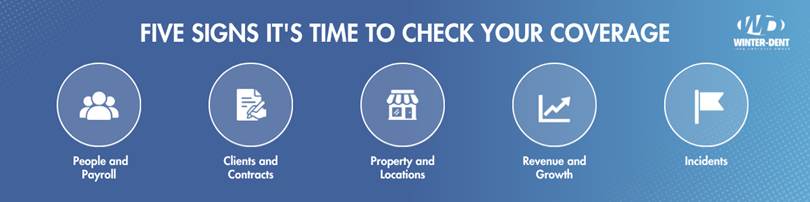
The Business Insurance Growth Checklist
Use this checklist anytime one of these changes happens, not just once a year. Each section covers a category of change and what it usually means for your coverage.
People and Payroll
- You hire your first employee
- You cross 10, 25, or 50 employees
- You add remote workers, especially in a new state
- You bring on your first manager or supervisor
Why it matters: New hires affect workers' compensation, payroll-based premium calculations, and your exposure to HR-related claims. Crossing certain employee thresholds can also change which regulations apply to your business.
Call your advisor if: any of the above happened in the last 90 days and hasn't been reviewed yet.
Clients and Contracts
- A contract requires specific insurance limits or an additional insured endorsement
- You land a significantly larger client or a government contract
- You start using subcontractors or independent contractors
Why it matters: Contracts increasingly spell out exact coverage requirements. Signing something you haven't checked against your current policy is one of the most common ways businesses discover a gap, usually at the worst possible time.
Call your advisor if: you're about to sign anything that mentions insurance requirements, before you sign it, not after.
Property, Equipment, and Locations
- You buy new equipment, vehicles, or technology
- You open a second location or expand your space
- You start carrying more inventory or higher-value assets
Why it matters: Property coverage is based on current replacement cost, not what you originally paid. Growth in assets you own or use is easy to overlook because nothing about it feels like an insurance decision at the time.
Call your advisor if: you've made a purchase or lease decision over the last quarter that changed what your business owns or occupies.
Revenue and Business Model
- Your revenue grows significantly year over year
- You add a new product or service line
- You expand into a new state or region
Why it matters: Revenue and payroll are often used to calculate premiums, and a new service line can introduce a type of risk your current policy was never priced for. This is about how your business works changing, not just how big it is.
Call your advisor if: what you sell, or where you sell it, looks different than it did a year ago.
Incidents and Near Misses
- You have a claim, even a small one
- You have a safety incident or a close call
- You experience a data breach or cybersecurity incident
Why it matters: An incident is also information. It's the clearest signal you'll get about whether your coverage actually responds the way you expected, and whether a safety gap needs to be addressed before it happens again.
Call your advisor if: anything happened, whether or not you plan to file a claim.
What Most Businesses Do vs. What Proactive Businesses Do
| Most Businesses | Proactive Businesses |
| Wait for renewal to think about coverage at all | Treat renewal as a checkpoint, not the only checkpoint |
| Sign contracts first and check the insurance fine print later, if at all | Check insurance requirements before signing anything |
| Assume their advisor will reach out if something needs to change | Reach out themselves when a trigger event happens, rather than waiting |
| Treat a claim as a one-time event to get through | Treat a claim as a signal to review whether coverage responded as expected |
How Often Should You Actually Talk to Your Advisor
At minimum, once a year at renewal. In practice, growing businesses should expect a short conversation with their advisor every time a trigger event on this checklist happens, which for most growing companies works out to three or four times a year, not once.
That might sound like a lot of check-ins. In practice, most of these conversations take fifteen minutes, because you're confirming one specific change rather than redoing a full review. The businesses that treat this as normal, ongoing communication end up spending less time in emergency mode than the ones who only think about insurance once a year.
How This Fits Into Prevent365
This checklist is the practical, day-to-day version of Winter-Dent's Prevent365 approach to risk management. Where Prevent365 provides the overall framework for reducing risk and putting your business in a stronger position with insurance companies, this checklist is the tool you actually use week to week to know when it's time to act. If you haven't already, it's worth reading how the full Prevent365 methodology works and how it applies to a growing small business.
Getting Started
If two or more items on this checklist describe something that's happened in your business over the last year, that's worth a conversation before it becomes a gap you find out about the hard way. A Winter-Dent advisor can walk through your current coverage against where your business actually stands today.
Frequently Asked Questions
How do I know if my business has outgrown its insurance coverage?
If your headcount, revenue, locations, or services have changed meaningfully since your last review, and nobody has looked at your policy since, there's a good chance your coverage hasn't kept up. The checklist above covers the most common triggers. If two or more apply to you, it's worth a review.
Do I need to update my policy every time something changes, or can it wait for renewal?
It depends on the change. Anything involving a signed contract, like an additional insured requirement, should be confirmed before you sign, not at renewal. Slower changes, like a gradual revenue increase, can often wait for your next scheduled review unless several changes are stacking up at once.
What should I bring to a coverage review meeting with my advisor?
A simple list of what's changed since your last review works better than trying to remember details on the spot: new hires, new contracts, new equipment or locations, revenue changes, and any incidents or near misses. Your advisor can take it from there.
Is it normal for insurance needs to change every year for a growing business?
Yes. A business that's actively growing should expect its coverage to change most years, sometimes more than once. This isn't a sign anything was done wrong originally. It's the expected result of a business that looks different than it did twelve months ago.
How is this checklist related to the Prevent365 framework?
Prevent365 is Winter-Dent's overall approach to managing risk in four stages. This checklist is a practical tool inside that approach, specifically for spotting the moments when your coverage needs a second look. It's the everyday version of a bigger, ongoing strategy.