





Commercial Property Insurance
The Gap Between What You Think You Are Covered For and What You Actually Are Can Be Costly
Rising construction material costs, tariffs on steel and lumber, skilled labor shortages, and supply chain disruptions have pushed rebuilding costs significantly higher over the past several years. A commercial property program valued based on figures from three or more years ago may carry limits that fall well short of what a full rebuild would actually cost today. Getting this right before a loss is far less expensive than discovering the gap during one.
What Commercial Property Insurance Actually Protects
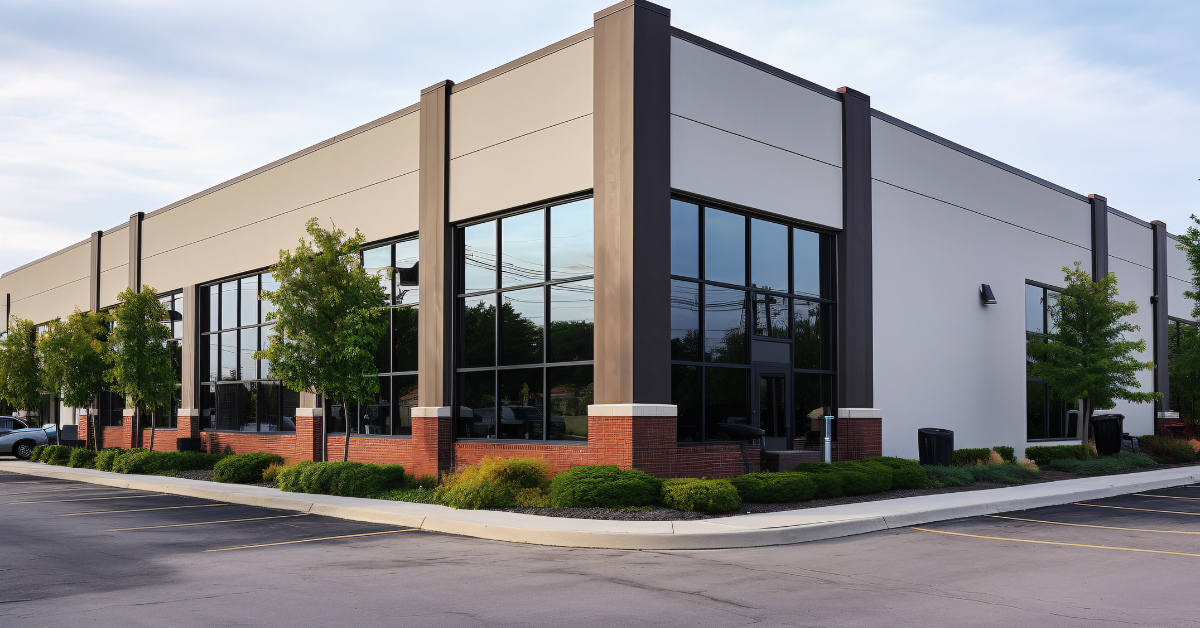
Commercial property insurance covers the physical assets your business depends on: buildings, equipment, inventory, furniture, and improvements you have made to leased spaces. When a covered event causes physical loss or damage, your policy pays to repair or replace what was affected so your operation can resume. Not every peril is automatically included, and the gaps between what business owners assume their policy covers and what it actually covers are where significant losses go uncompensated.
Two factors determine whether your property coverage actually performs when you need it: whether your policy includes the right causes of loss, and whether your limits reflect current rebuilding costs. Both require active review. Covered perils can change as policies renew, and replacement cost figures go stale as construction costs move. An annual review of both is the discipline that separates a policy that pays in full from one that leaves a gap.
Building and Structure Coverage
Business Personal Property
Business Interruption
An Underinsured Property Loss Can Be as Damaging as an Uninsured One
The coverage you have matters. So does whether the limits actually match what a rebuild would cost in today’s market.
Accurate Valuation
Steel, lumber, copper, and skilled labor are all more expensive than they were several years ago. A property valued at outdated replacement cost figures will leave a gap at claim time. Accurate valuation is the foundation of a policy that pays in full.
Business Continuity
A fire, severe storm, or other covered event does not just destroy property. It interrupts revenue, threatens client relationships, and creates ongoing expenses while your facility is unusable. Business interruption coverage bridges that period financially.
Lender and Lease Requirements
Commercial mortgages and lease agreements almost always require property coverage at specified limits. Coverage gaps can trigger technical defaults even when a claim has not occurred.
Equipment and Technology
Modern business equipment is more expensive and more specialized than it was a generation ago. Equipment breakdown coverage and electronic data restoration address categories that a basic property form often does not.
Most Businesses Update Their Property Coverage When They Move. Proactive Businesses Update It Every Year.
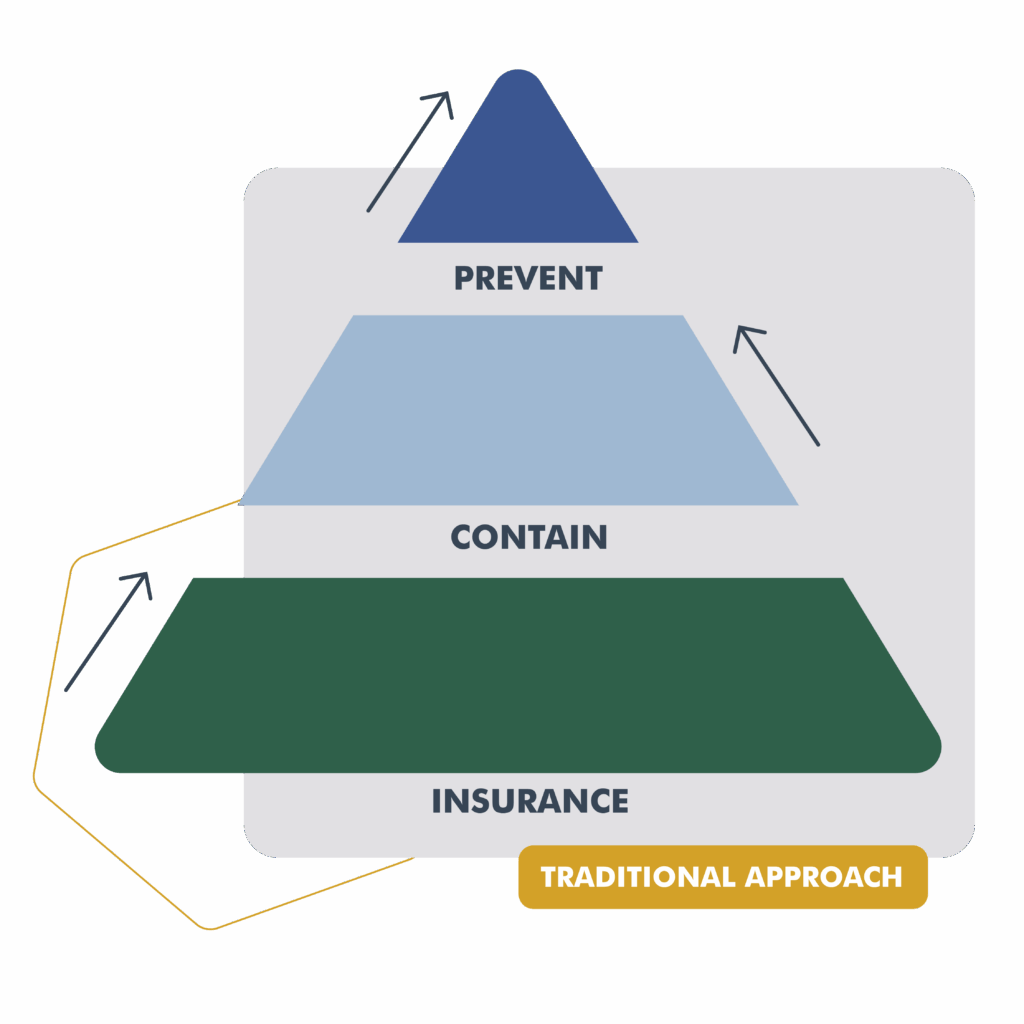
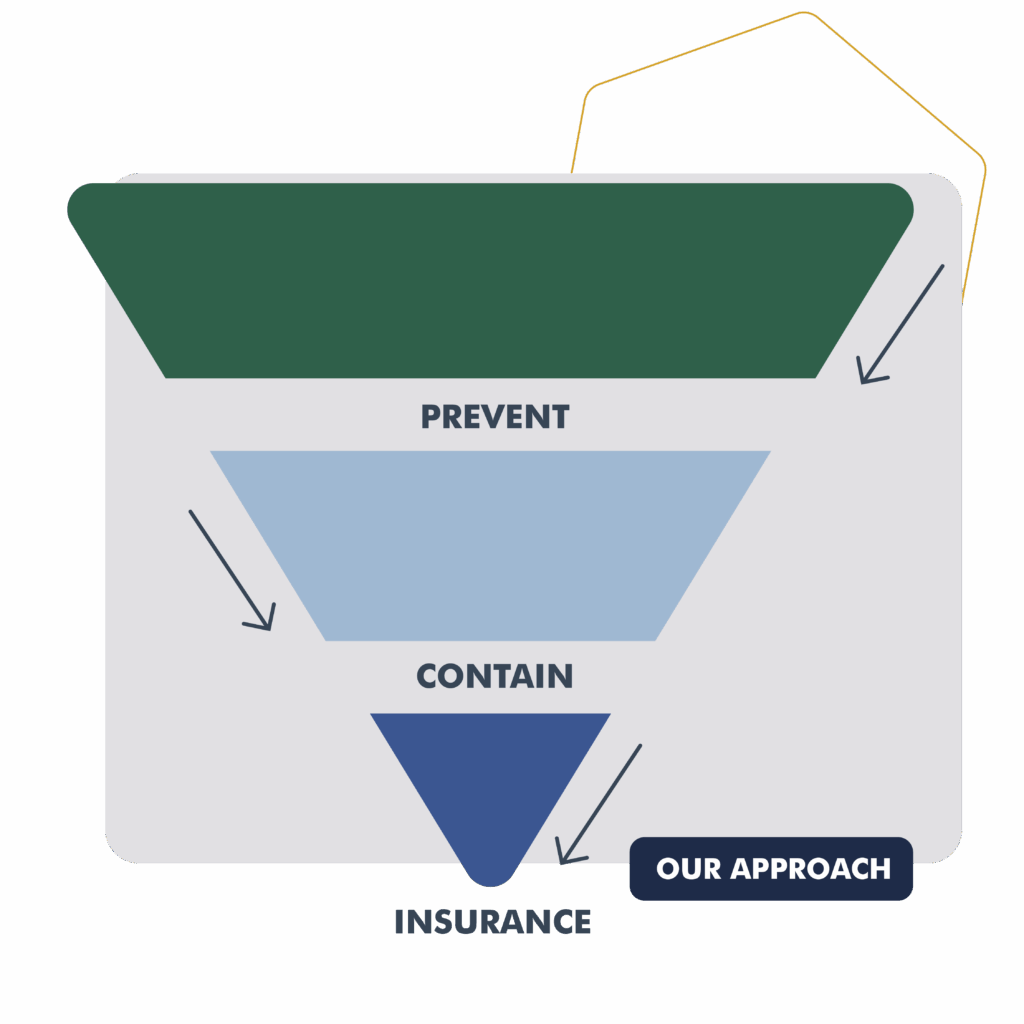
Our Prevent365 approach includes a systematic review of your property values, covered perils, and business interruption exposure before each renewal, so your program keeps pace with your actual assets.
Traditional Risk Management
❌ Flood and sewer backup excluded by default and never addressed
The Prevent365 Way
Types of Commercial Property Coverage
Core Property Coverage
Covers physical damage to structures your business owns from covered causes of loss. Applies to the main building as well as permanently attached fixtures, machinery, and equipment. Typically written on a replacement cost basis, meaning the policy pays to rebuild at current costs rather than the depreciated value of what was lost.
Covers the contents of your building including equipment, inventory, furniture, and supplies. If you lease your space, BPP is typically your entire property coverage responsibility. Tenant improvements and betterments you have made to a leased space require specific attention to ensure they are covered.
Replaces net income and covers continuing operating expenses when a covered property loss forces you to shut down or reduce operations. The indemnity period needs to be long enough to account for realistic rebuild timelines, which can be longer than business owners estimate given current contractor availability and permit backlogs.
Pays for costs above normal operating expenses that allow you to continue operating after a covered loss. Includes temporary facility costs, expedited shipping for replacement equipment, and overtime labor. Works alongside business interruption to minimize the financial impact of a shutdown.
Specialized and Extended Coverage
Covers sudden and accidental breakdown of mechanical, electrical, and pressure equipment including HVAC systems, boilers, production machinery, and computer systems. Standard property forms exclude mechanical breakdown, making this a frequently overlooked gap for manufacturers and operations-intensive businesses.
Standard commercial property policies exclude flood damage from rising surface water. Separate flood coverage through NFIP or private market carriers is required for properties with flood exposure. Sewer backup coverage, also typically excluded, is available by endorsement.
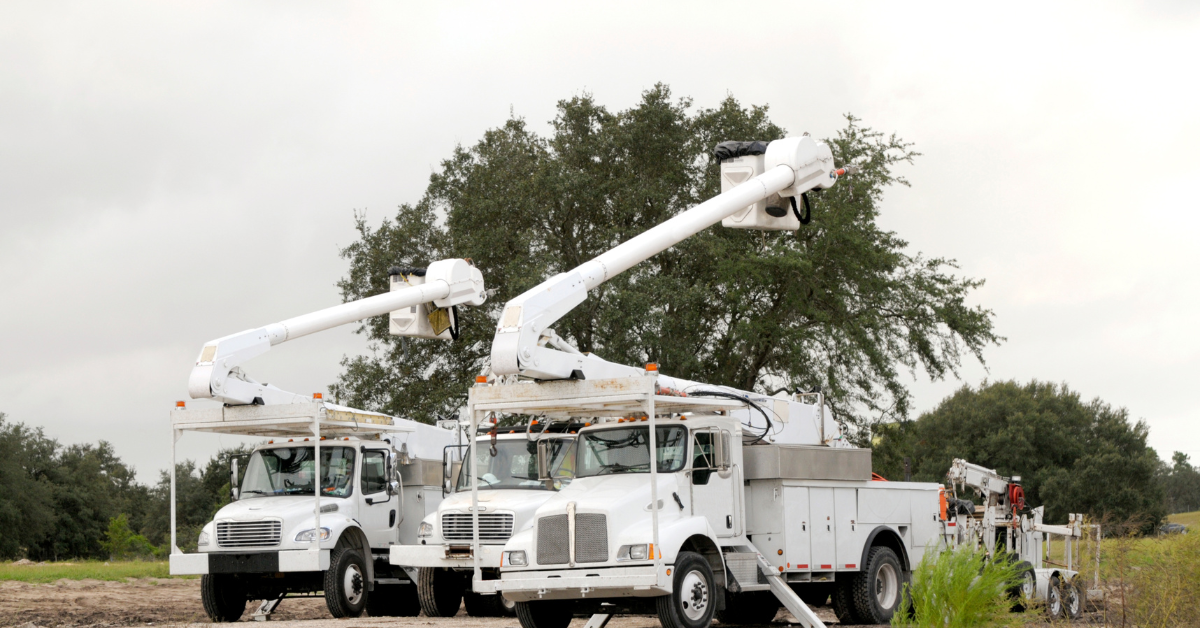
Covers business property that moves, including contractor’s equipment, tools, materials in transit, and property at job sites or temporary locations. Standard property forms cover contents at the scheduled location only; property away from your premises typically requires an inland marine policy.
When a covered loss requires rebuilding, local ordinances may mandate upgrades to current building codes that your original structure did not meet. Ordinance or law coverage pays the additional cost of bringing the rebuilt structure up to current code, which can be substantial for older buildings.


Tailored Commercial Property Strategies
What Our Clients Say


Humans Helping Humans
Valuation Discipline
The most common source of property coverage failure is not an excluded peril. It is a covered peril where the limits are not sufficient to cover what a rebuild actually costs. We review replacement cost valuations annually and flag discrepancies before they become claim-time problems.
Covered Peril Expertise
Standard property forms exclude more than most business owners realize. We review your covered and excluded perils specifically, identify gaps that match your location and operations, and address them with endorsements or supplemental policies before a loss reveals them.
Prevent365 Property Review
Our process includes a structured review of your property values, covered perils, business interruption exposure, and excluded perils before each renewal. That review identifies gaps before a loss does.
Beyond the Policy
Risk control recommendations, loss prevention resources, and connections to property inspection services are part of how we help clients reduce the frequency and severity of property losses, not just insure against them.
Additional Lines of Business Coverage
Ready to Find Out Whether Your Property Coverage Reflects What a Rebuild Would Actually Cost?
A property coverage review starts with your current statement of values and works through your covered perils, exclusions, and business interruption limits. It is a practical conversation that most businesses have never had in enough detail.
Learn More About Commercial Property Coverage


Replacement cost pays to repair or rebuild your property at current costs without deducting for depreciation. Actual cash value (ACV) pays the depreciated value of what was lost, which can be significantly less than what a repair or rebuild actually costs. For a ten-year-old HVAC system destroyed in a fire, a replacement cost policy pays for a new unit. An ACV policy pays what a ten-year-old unit was worth, often a fraction of replacement cost. For most businesses, replacement cost coverage is the appropriate standard.
Standard commercial property policies exclude flood damage caused by surface water, storm surge, or overflowing bodies of water. This is a significant gap for many businesses. Separate flood coverage through the National Flood Insurance Program (NFIP) or a private flood carrier is required to address this exposure. Flood risk for a specific property can be assessed using FEMA flood maps, and coverage should reflect both the mapped risk and the actual situation of the property.
The most reliable answer is a current replacement cost appraisal from a qualified appraiser, which establishes what it would cost to rebuild your structure and replace your contents at today’s prices. Your insurance advisor should also be reviewing your statement of values annually against current construction cost indices for your region. Given that construction materials have increased significantly in recent years due to tariffs and supply chain issues, policies not updated in two to three years may carry limits that would not cover a total loss today.
Business interruption coverage replaces the net income your business would have earned during a period when a covered property loss forces you to shut down or reduce operations. It also covers continuing expenses like rent, loan payments, and employee salaries that keep accruing even when revenue stops. The coverage lasts for the period of restoration, defined as the time required to repair or replace the damaged property and resume normal operations. That period needs to account for realistic rebuild timelines, which can be significantly longer than business owners anticipate.
Yes. A landlord’s property policy covers the building structure but does not cover your business contents, equipment, inventory, or improvements and betterments you have made to the leased space. Without business personal property coverage, a fire, theft, or other covered event that destroys your equipment and inventory leaves you without the tools your business needs to operate, with no insurance to replace them. Your lease agreement may also require you to maintain coverage for your contents and improvements as a tenant obligation.
Need to File a Claim? We’re Here to Help.
Start reporting your claims online
Let’s Start a Better Conversation About Risk
Email Us
info@winter-dent.com
Call Us
(573) 634-2122