
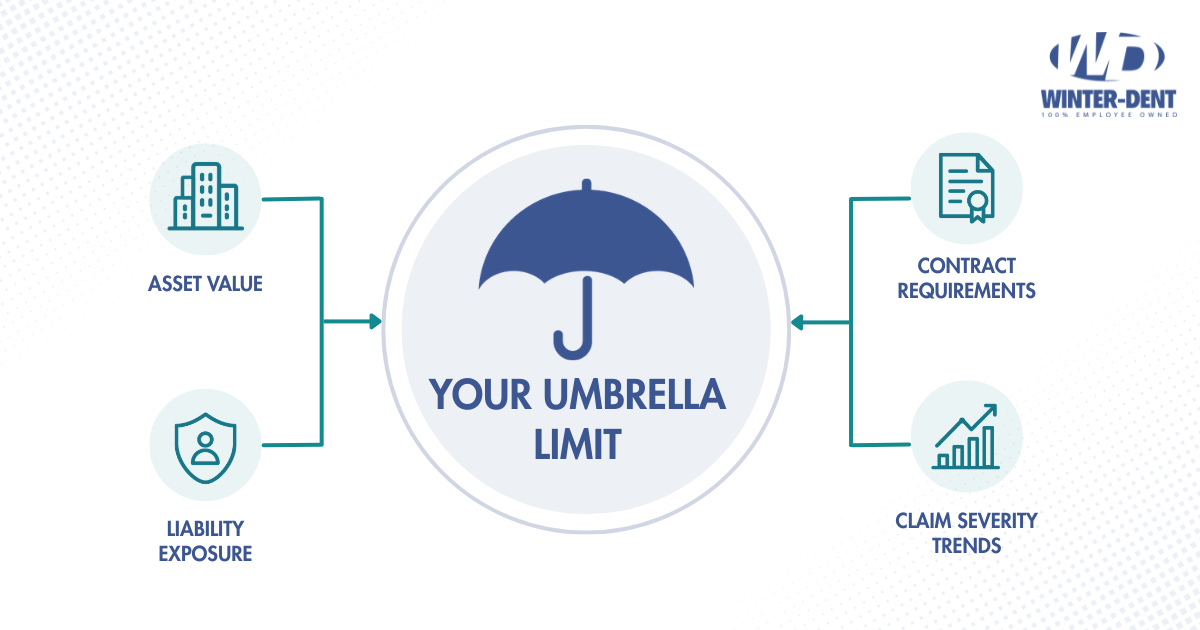
Many business owners assume a round-number umbrella limit, often $1 million or $2 million, chosen years ago and left unchanged, is sufficient protection. That assumption rarely holds up against current jury verdict trends. The right umbrella limit is not a standard number. It is a calculation based on your business's assets, contracts, and realistic claim severity, and it needs revisiting as all three change.
The Myth: "We Have a Million Dollar Umbrella, So We're Covered"
This is one of the most common assumptions in commercial liability planning, and one of the easiest to leave unexamined for years. A business sets an umbrella limit when the policy is first written, often based on what felt like a reasonable, round number at the time, and the figure simply carries forward at each renewal without anyone asking whether it still matches reality.
The number itself was rarely calculated. It was often selected because it sounded substantial, matched what a competitor carried, or satisfied whatever contract requirement existed at the time. None of those reasons connect the limit to what a serious claim against the business would actually cost today.
Quick Answer: How Do I Know I Have a High Enough Umbrella Limit?There is no universal umbrella limit that is automatically "enough." The appropriate limit depends on your business's asset value, the liability exposure of your operations, any contractual insurance requirements you carry, and the realistic cost of a serious claim in your industry given current jury verdict trends. A limit chosen years ago without this analysis is unlikely to reflect what your business needs today. |
Why the Number That Felt Right Years Ago No Longer Is
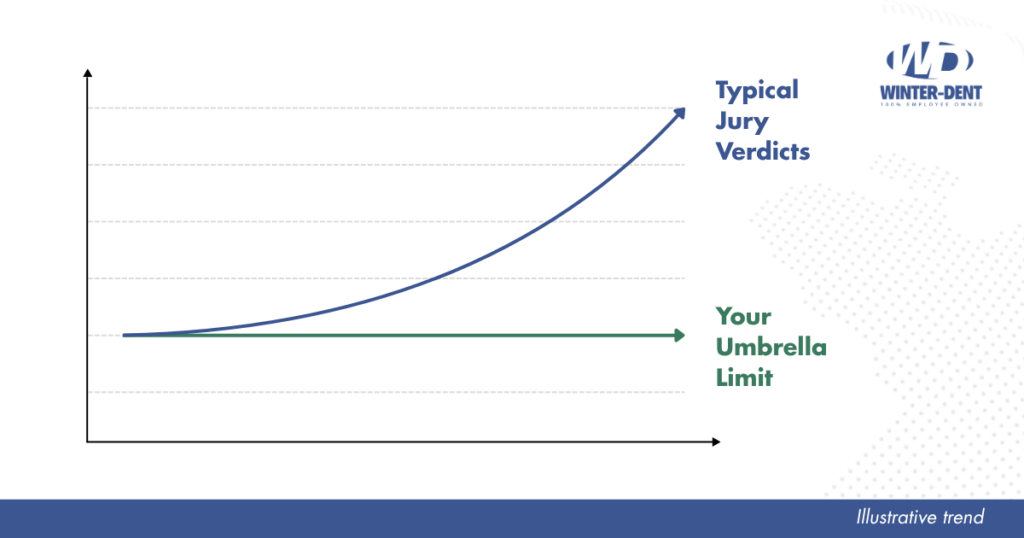
Jury awards against businesses have grown substantially over the past decade. Nuclear verdicts that would have been considered extreme outliers a decade ago now occur with enough regularity that insurers and risk advisors track them as a distinct category. A limit that felt comfortably large when it was set may now represent a fraction of what a single serious injury, product liability claim, or vehicle accident could generate in the current litigation environment.
At the same time, most businesses have grown. Revenue, assets, payroll, and contract values have all increased since the umbrella limit was originally set. A limit that once represented a meaningful multiple of business assets may now represent a much smaller cushion relative to what the business actually has to lose.
Neither of these shifts happens on a schedule that aligns with insurance renewals. They accumulate quietly, which is exactly why a limit set once and never revisited becomes increasingly inadequate without anyone noticing until a claim exposes the gap.
What Most Businesses Do vs. What Proactive Businesses Do
| Most Businesses | Proactive Businesses |
|---|---|
| Set a round-number limit once and carry it forward at every renewal | Calculate limit needs based on assets, exposure, and contract requirements |
| Choose a limit that sounds substantial | Choose a limit connected to the realistic cost of a serious claim in their industry |
| Treat limit adequacy as settled once a policy is in place | Revisit limit adequacy annually as the business and legal environment change |
| Learn their limit was insufficient when a judgment exceeds it | Confirm their limit against current jury verdict trends before a claim occurs |
| View umbrella coverage as a single flat number | Understand how layered excess programs can build a larger total limit when needed |
The Strategic Insight Most Businesses Miss
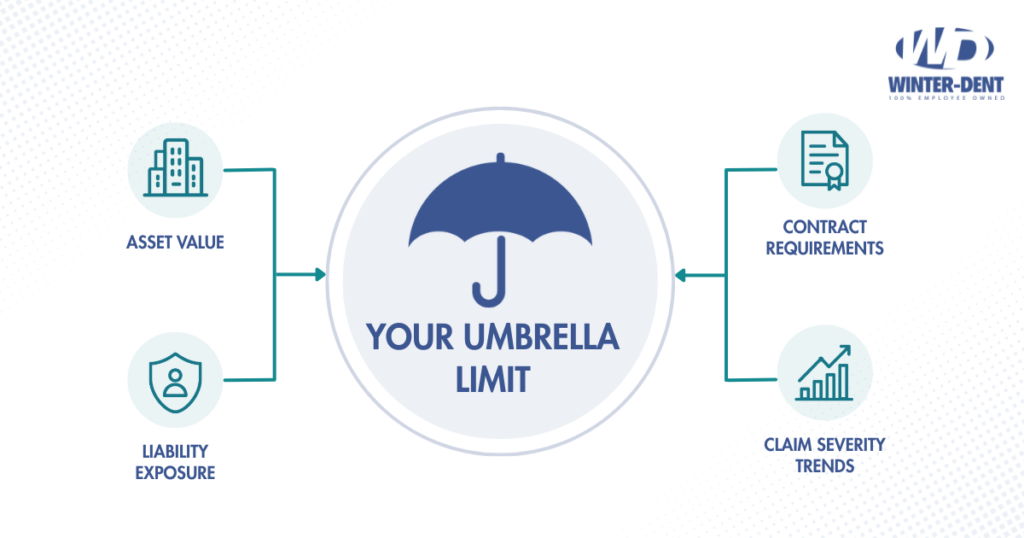
Umbrella limit adequacy is not primarily an insurance question. It is a business valuation question wearing an insurance question's clothing. The right way to approach it is to start with what the business actually has to lose, its assets, its future earnings, its owners' personal exposure if the business cannot fully absorb a judgment, and work backward to a limit that provides meaningful protection against that specific downside. Starting instead from "what number sounds like enough" produces exactly the kind of underinsurance gap that goes unnoticed until it matters most.
This is also where contract requirements intersect with the analysis. General contractors, commercial landlords, and larger clients increasingly require minimum liability limits, often $5 million or more in total coverage, before agreeing to work with a business at all. A business that has not reviewed its limit against current contract requirements risks losing opportunities entirely, independent of whether a claim ever occurs.
Winter-Dent's Prevent365 methodology treats limit adequacy as an annual question rather than a one-time decision, mapping your total liability exposure across all underlying policies before recommending how much additional coverage your business actually needs, rather than defaulting to whatever number was convenient at the last renewal.
Talk to a Winter-Dent advisor about whether your current umbrella limit still matches your business's actual exposure. Many businesses discover the gap has grown larger than they realized.
How do I determine the right umbrella insurance limit for my business?Start with your business's total asset value, the liability exposure your operations carry, and any minimum limits required by contracts or clients. From there, weigh the realistic cost of a serious claim in your industry given current jury verdict trends. A limit chosen years ago without this analysis should be reviewed, since asset values and verdict trends both shift over time. |
See How This Fits Into a Complete Liability Program
Determining the right limit is only part of the picture. Learn how a properly structured umbrella and excess liability program coordinates with your underlying policies, and see how Winter-Dent's Prevent365 approach maps your total exposure before recommending a limit.

Frequently Asked Questions
Is there a standard umbrella limit most businesses our size carry?
There is no reliable standard, because the right limit depends on your specific assets, operations, and contract requirements rather than your size alone. A small business with significant public-facing liability exposure, such as a contractor working on client sites, may need a higher limit than a larger business with lower-risk, primarily internal operations. Benchmarking against "what similar businesses carry" is less useful than calculating your own exposure directly.
How often should we revisit our umbrella limit?
At least annually, and specifically any time the business experiences a meaningful change, such as significant revenue growth, a new large contract, an acquisition, or a new category of operations. Jury verdict trends also shift over time, which is a reason to revisit limit adequacy even in years when the business itself has not changed significantly.
What is a layered excess program and when do we need one?
A layered excess program stacks multiple excess policies from different insurers on top of each other to reach a total limit larger than any single insurer is willing to provide. Businesses that need a substantial total limit, often driven by contract requirements or high-exposure operations, may need this structure rather than a single umbrella policy, since umbrella capacity from any one carrier is not unlimited.
Do contract requirements ever exceed what our business would otherwise choose to carry?
Yes, this is common. General contractors, commercial landlords, and larger clients increasingly set minimum liability limits, sometimes $5 million or more, as a condition of doing business, independent of what a business would calculate as adequate based on its own risk profile alone. Reviewing active and anticipated contract requirements is a necessary part of setting an appropriate limit.
Will increasing our umbrella limit significantly increase our premium?
Umbrella coverage is generally efficient relative to the protection it adds, meaning the cost per additional million dollars of coverage is typically modest compared to the cost of the underlying primary policies. The specific increase depends on your industry, claims history, and overall risk profile, but for most businesses, moving from an inadequate limit to an adequate one is a smaller cost increase than owners expect.