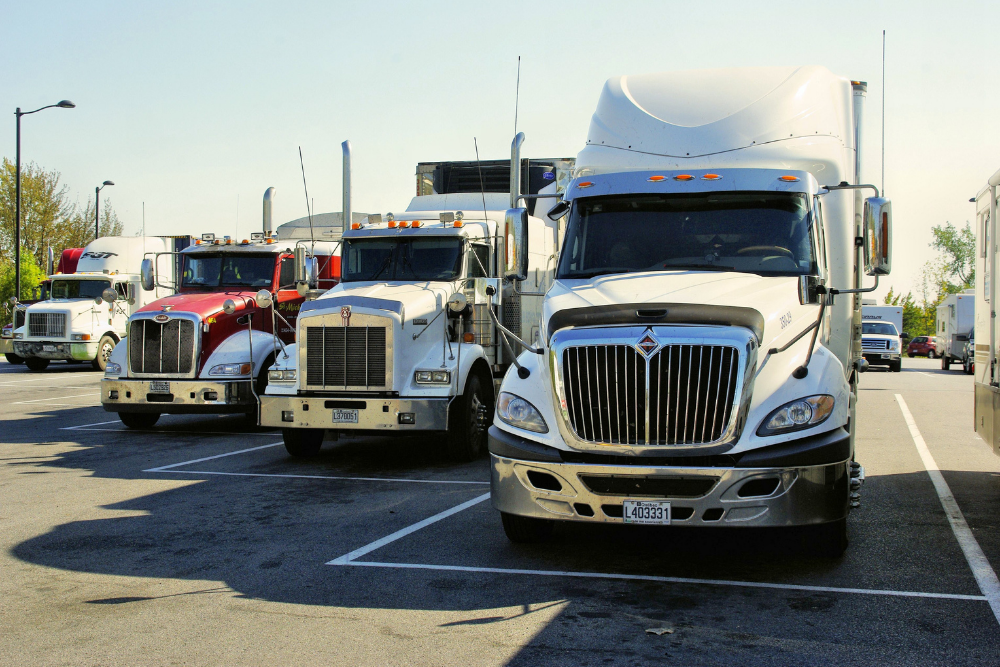
Missouri business owners with commercial fleets are seeing some of the most aggressive premium increases in a generation. Understanding the real drivers, and what you can actually control, is the starting point for a smarter response.
| The short answer Commercial auto premiums have increased every quarter for more than a decade, driven by three converging forces: a sustained surge in nuclear jury verdicts, rising vehicle repair and medical costs, and underwriting losses that have forced carriers to tighten capacity and raise rates across entire industries. These are systemic pressures that affect every fleet, regardless of your own loss history. But your loss history, your safety program, and how your account is presented to underwriters still determine where within a wide pricing range you land. |
Why Commercial Auto Premiums Keep Climbing
Most business leaders assume their renewal increase reflects something specific about their company. Usually it does not. The commercial auto market itself has been broken for over a decade, and your premium is reflecting that reality far more than it is reflecting your individual performance.
The market has posted underwriting losses for 13 consecutive years. Combined loss ratios have stayed above 100% throughout, meaning carriers have paid out more in claims and expenses than they collected in premiums, quarter after quarter.
That kind of sustained unprofitability forces a response. Carriers raise rates, reduce the limits they are willing to offer, exit certain industries entirely, or impose stricter underwriting requirements. All of those responses are happening simultaneously right now, and Missouri businesses are not insulated from any of them.
The drivers are not random. They cluster into categories that are worth understanding separately, because some are entirely outside your control and some are not.

Nuclear Verdicts: The Market Force Hitting Every Fleet
A nuclear verdict is a jury award exceeding $10 million. A thermonuclear verdict exceeds $100 million. Both categories have become dramatically more common in commercial auto cases over the last decade.
| What is a nuclear verdict, and why does it matter to your fleet?A nuclear verdict is a civil jury award exceeding $10 million. In commercial auto cases, these verdicts have surged in both frequency and scale. In 2024, there were 135 corporate nuclear verdicts totaling $31.3 billion in awards, a 116% increase over the prior year. The median award reached $51 million. Even if your company is never directly named in one of these suits, you are paying for this trend through market-wide premium increases. |
What makes this especially relevant for fleet operators is the compounding effect. Carriers price for expected losses, and expected losses now include the statistical probability of a catastrophic verdict, not just average claim costs. Nuclear verdicts in trucking and commercial auto specifically have risen more than 900% since 2010. That pricing reality touches every fleet, including those with clean records.
The factors fueling this trend are largely legal and social. Third-party litigation funding, now a $30 billion global industry, finances plaintiff lawsuits in exchange for a share of awards.
Attorney advertising has become aggressive and pervasive. Plaintiff strategies like reptile theory train juries to view commercial defendants as threats to community safety, which drives emotional decision-making in the jury box and larger awards.
Tort reform at the state level could eventually moderate this trend, but Missouri businesses should plan for a legal environment that remains litigious for the foreseeable future.
Vehicle Repair and Medical Costs: The Inflation Nobody Talks About
Beyond the courtroom, two categories of real-world costs have escalated sharply and show no sign of reversing.
Modern commercial vehicles are built with advanced driver assistance systems, specialized sensors, and proprietary components. A fender bender that would have cost a few thousand dollars to repair a decade ago now involves calibrating camera arrays and replacing integrated bumper assemblies. Vehicle repair costs have risen roughly 40% since 2020.
Medical treatment costs tied to auto liability claims have followed a similar trajectory, up approximately 38% since 2020 and accelerating. When an injured third party requires surgery, rehabilitation, or long-term care, those costs flow directly through the liability claim and ultimately through your premium.
Neither of these trends is within any individual fleet operator's control. But they are the reason that even a fleet with zero claims still faces upward pressure at renewal.
Why Carriers Are Reducing Capacity in Certain Industries
Carrier capacity in commercial auto has tightened meaningfully over the last several years. Some carriers have exited the market for specific industries outright. Others have reduced the limits they will write, shifted their appetite away from certain fleet types, or increased minimum deductibles to transfer more risk back to the insured.
Industries most affected include transportation and trucking, construction, home health and medical transport, and any fleet with high annual mileage or significant interstate exposure. If your operation falls into one of these categories, the market is not just more expensive for you, it is also less available.
This capacity contraction has a secondary effect: when fewer carriers are willing to compete for your account, you lose pricing leverage at renewal. A single carrier quoting at renewal is not a market. It is a take-it-or-leave-it situation, and most businesses do not have the risk profile documentation to change that dynamic without help.
| How much of your premium reflects your loss history vs. broader market trends? Both factors are at work in every renewal. In a hard market, carriers apply base rate increases across an entire industry class, so some portion of your increase is completely independent of your own claims performance. However, your experience modification, individual loss runs, fleet safety data, and driver history still influence your final rate within a wide band. Strong risk management documentation can compress that band meaningfully, while poor preparation leaves you at the high end. |
Does Telematics Actually Influence Underwriting Results?
The short answer is yes, but only when the data is used strategically.
Telematics and dashcam systems generate substantial data on driver behavior, including hard braking, speeding, following distance, and phone use. Fleets using these tools consistently report 15 to 20% fewer severe claims. Some carriers factor telematics engagement directly into underwriting decisions. Others use it as a proxy for management discipline, a signal that leadership is paying attention.
The problem is that most businesses have the technology and are not using the data purposefully. The telematics portal sits open, reports go unread, and coaching conversations never happen. Carriers know this. A telematics subscription is not the same as a telematics program.
What actually moves the needle at underwriting is a documented safety improvement trajectory. That means using the data, coaching drivers, tracking incident trends, and showing year-over-year improvement. When that story is part of your renewal submission, it changes how underwriters evaluate your account. When it is absent, telematics data is just noise.
Winter-Dent's AutomateSafety tool integrates with telematics platforms to help fleet operators build exactly this kind of documented safety narrative, turning data that already exists into underwriting leverage.
What Most Brokers Do vs. What a Proactive Advisor Does
The commercial auto market is difficult for everyone right now. The difference between companies experiencing manageable increases and those facing crisis-level renewals often comes down to how the account is prepared and presented, not just what the claims history looks like.
| What Most Brokers Do | What Prevent365 Does Differently |
| Reactive brokers accept market increases as fixed and inevitable | Proactive advisors document your safety investments and differentiate your account at underwriting |
| Telematics data sits unused in a vendor portal | Telematics data is packaged into a renewal narrative that carriers actually read |
| Claims are filed and forgotten | Claims are reviewed for patterns, root causes are addressed, and reserve accuracy is monitored |
| Loss history is presented as-is | Loss history is contextualized with trend lines, corrective actions, and outcomes |
| Alternative structures are never discussed | Captive feasibility is evaluated before each renewal for qualifying fleets |
When Should a Missouri Fleet Consider a Captive Instead of Absorbing the Market?
This is the question that rarely gets asked until a company is in real pain. It should be asked much earlier.
A group captive is an alternative risk financing structure where multiple companies co-own an insurance subsidiary. Instead of paying premiums to a commercial carrier that absorbs profits regardless of your performance, captive members fund their own losses and retain underwriting profits when claims are kept low. Your premium reflects your risk, not the risk of the broader market class.
For Missouri mid-market businesses running commercial fleets with strong safety cultures, a captive can fundamentally change the economics of insurance over time. It is not a short-term fix, and it is not appropriate for every company. But for the right profile, it is one of the most powerful tools available for controlling total cost of risk.
| Can commercial auto realistically function inside a captive? Yes, and it is increasingly common for mid-market fleets to include commercial auto liability alongside workers' compensation and general liability in a multi-line group captive. The key is qualifying on the right criteria. Businesses with strong safety programs, stable loss histories, and sufficient premium volume are the best candidates. A group captive structure is typically accessible starting at combined P&C premiums of $250,000 annually, making it relevant for many Missouri businesses that have traditionally assumed captives were only for large corporations. |
Captive Eligibility: A Starting Framework
Winter-Dent evaluates captive fit before every renewal for clients who may qualify. General eligibility indicators include:
| Eligibility Factor | Typical Threshold |
| Combined P&C premiums | $250,000+ annually (workers' comp, auto, GL combined) |
| Workers' comp premium alone | $100,000+ annually |
| Claims performance | Claims consistently below 50% of premiums paid |
| Loss history trend | Stable or improving over 3-5 years |
| Safety program maturity | Documented, active, with measurable results |
| Management commitment | Leadership engaged in risk reduction, not just cost transfer |
Companies that do not yet meet these thresholds are not disqualified from captive participation in the future. The right risk advisor will help you build toward eligibility by improving your loss history, strengthening your safety program, and positioning your account correctly in the standard market in the interim.
The Strategic Insight Your Broker Is Probably Not Giving You
Most commercial insurance conversations focus entirely on price. What carrier came in lowest. What deductible structure changes the number. Whether you should layer your limits differently.
Those are not bad questions. But they are downstream of a more important question: what is the total cost of risk associated with your fleet operations, and how much of that cost is actually controllable?
Total cost of risk includes premiums, retained losses within your deductible, claims management costs, indirect costs like lost productivity and vehicle downtime, and the administrative cost of managing your program. In most businesses, the premium is only part of that picture. A company focused purely on premium reduction may be ignoring larger drivers of total cost.
The Prevent365 methodology starts with that fuller picture. Root cause analysis on claim patterns, driver coaching programs tied to actual data, vehicle maintenance standards that reduce physical damage frequency, and renewal preparation that differentiates your account from industry peers. These are not soft advisory concepts. They produce measurable results in underwriting outcomes.
If your current broker's engagement with your fleet is limited to renewal negotiations, you are leaving real money on the table, and absorbing more risk than you need to.
Ready to Get a Clearer Picture of Your Fleet Risk?
Winter-Dent works with Missouri businesses to diagnose the real drivers of their commercial auto costs, build documented safety programs that create underwriting leverage, and evaluate whether alternative risk structures like captives make sense for their profile.
If your commercial auto renewals have been painful and you want to understand what is actually within your control, that conversation starts with a risk assessment, not a quote request.
Reach out to the Winter-Dent team to schedule a Prevent365 commercial auto diagnostic.
Frequently Asked Questions
Why does my commercial auto premium keep going up even when I have not had any claims?
Commercial auto is one of the few insurance lines where market-wide losses drive rates for every policyholder, not just those with poor claims history. Carriers have posted underwriting losses for 13 consecutive years.[1] The increases you are absorbing reflect nuclear verdicts against other companies, rising repair and medical costs industry-wide, and a general rebalancing of risk pricing. That said, your own loss history, safety program, and how your account is documented still determine where within the carrier's pricing band you land. Clean accounts with strong documentation consistently outperform at renewal.
What role does social inflation play in commercial auto insurance, and is it getting better?
Social inflation refers to the increase in insurance claim costs that exceeds normal economic inflation, driven by a more litigious environment, larger jury awards, and the growing influence of third-party litigation funding. In commercial auto, the effect is most visible in liability claim severity. Nuclear verdicts in commercial auto and trucking cases have surged more than 900% since 2010.[3] There is no near-term relief on the horizon. Tort reform efforts are underway in some states, but progress is slow and contested. Missouri businesses should plan for this environment to persist.
At what point does it make sense to explore a captive instead of continuing to renew in the standard market?
The clearest signal is when your loss performance is genuinely better than your industry peers but your premiums keep rising alongside the market. That means you are effectively subsidizing worse operators. A group captive breaks that connection by pricing your risk based on your performance, not your industry class average. General eligibility starts around $250,000 in combined P&C premiums annually, with claims consistently below 50% of premiums paid.[6] If you are approaching those thresholds and your safety culture is strong, a captive evaluation should be part of your next renewal conversation.
How should we be using telematics data to actually influence our insurance outcomes?
The most common mistake is purchasing a telematics system and treating the data as a liability audit rather than a coaching tool. Underwriters respond to documented safety improvement trends, not just the presence of a telematics subscription. Build a formal process: review data regularly, conduct driver coaching conversations based on actual incidents, track improvement metrics, and compile that narrative for your renewal submission. Carriers want to see that leadership is engaged and that the data is driving behavior change. That story, properly documented, shifts how underwriters evaluate your account.
How do we know if our current broker is actually helping us manage commercial auto costs, or just renewing our policy?
The clearest diagnostic is engagement frequency. A broker who contacts you only at renewal is operating as a policy vendor, not a risk advisor. A proactive advisor reviews your loss runs quarterly, monitors claims reserves, analyzes driver safety data, and prepares a formal underwriting narrative before renewal. They should also be proactively discussing alternative risk structures if your premium volume and loss history make you a candidate. If those conversations are not happening, ask your broker directly. If the answer is unsatisfying, it may be time to evaluate your options.
This article is intended for general educational purposes and does not constitute legal, actuarial, or insurance advice. Commercial auto insurance markets, underwriting criteria, and captive eligibility thresholds vary by carrier, domicile, and individual business circumstances. Businesses should work with a qualified risk advisor to evaluate options specific to their situation. Winter-Dent & Company is a licensed insurance broker. Captive structures involve legal, regulatory, and financial considerations that require professional guidance.